

Buying your first home Doesn't Have To Be Overwhelming.
Everything Nobody Tells You About Buying Your First Home...
Explained clearly. In plain English. And in the order you actually need it.
Mortgages. Deposits. Jargon. It's a lot. That's why I made this guide



Step by Step Guidance

Avoid Costly Mistakes

Confidently Get The Keys

Your First Home Made Simple
Unlocking Your Dream Home Could Be Closer Than You Think.
Mortgage Baby’s Guide takes you through the complete journey—helping you understand not only what happens, but why it matters, what can go wrong and what you can do to prepare.
Inside, you’ll discover:

AFFORDABILITY
Understand the difference between what a lender may allow you to borrow and what you can comfortably afford. Discover how lenders assess income, overtime, commission, bonuses, existing commitments and salary sacrifice—and why an online mortgage calculator may not tell the whole story.

CREDIT FILES & FINANCIAL READINESS
Discover what mortgage lenders actually see—and why your full credit history matters more than the score shown by an app. Learn about credit utilisation, overdrafts, missed payments, buy now pay later, electoral registration and the financial decisions best avoided before applying.

THE MORTGAGE IN PRINCIPLE
Learn what a Mortgage in Principle really means, what it does not guarantee and why having one can make you a more credible buyer. Understand soft and hard credit searches, expiry dates and how to use your Mortgage in Principle properly.

UNDERSTANDING MORTGAGE DEALS
Learn why the lowest interest rate is not necessarily the cheapest mortgage. Understand arrangement fees, total cost, APRC, fixed-rate periods, early repayment charges and portability—so you can look beyond the headline rate.

VIEWING PROPERTIES PROPERLY
Move beyond décor and first impressions. Learn what to look for during a viewing, which questions to ask and how to assess the property more clearly before emotion takes over.

SURVEYS, VALUATIONS & LEGAL WORK
Understand the difference between a mortgage valuation and a property survey. Discover what your solicitor is checking, why searches matter and what happens behind the scenes after your offer is accepted.

INSURANCE & PROTECTION
Understand the protection conversations that accompany a mortgage. Learn the purpose of buildings insurance, life cover, critical illness protection and income protection—without confusing insurance with mortgage approval.

DEPOSITS & SOURCES OF FUNDS
Learn how your deposit affects the mortgage deals available to you and why moving from a 5% to a 10% deposit can make a meaningful difference. Understand gifted deposits, Lifetime ISAs, source-of-funds checks and the evidence lenders and solicitors may request.

THE RIGHT ORDER OF EVENTS
Understand why finding a property before preparing your finances can create unnecessary pressure and disappointment. Follow the process in the right order—from setting a comfortable budget and checking your credit position to obtaining a Mortgage in Principle and making a prepared offer.

CHOOSING A MORTGAGE BROKER
Understand the difference between tied, restricted and whole-of-market mortgage advice. Discover what a good broker should do, the questions you should ask and the warning signs worth recognising before you commit.

FREEHOLD VS LEASEHOLD
Understand what you are actually buying and the responsibilities that may come with it. Learn about lease length, service charges, ground rent and the questions worth asking before committing to a leasehold property.

MAKING AN OFFER
Learn how to present an offer clearly, professionally and strategically. Understand how your buying position can strengthen an offer—and why the highest offer is not always the one a seller chooses.

EXCHANGE, COMPLETION & MOVING IN
Understand the final stages of your purchase—from signing contracts and exchanging to completion day and collecting the keys. Know when the purchase becomes legally binding and what you should prepare before moving day.

CLARITY CREATES CONFIDENCE
Bring everything together and see the complete home-buying journey as one clear, connected process.
Because when you understand what happens next, buying your first home stops feeling overwhelming—and starts feeling achievable.
Buying your first home involves much more than finding a property and applying for a mortgage.
There are deposits to evidence, credit files to understand, mortgage deals to compare, properties to assess, offers to negotiate and an entire legal process to navigate.
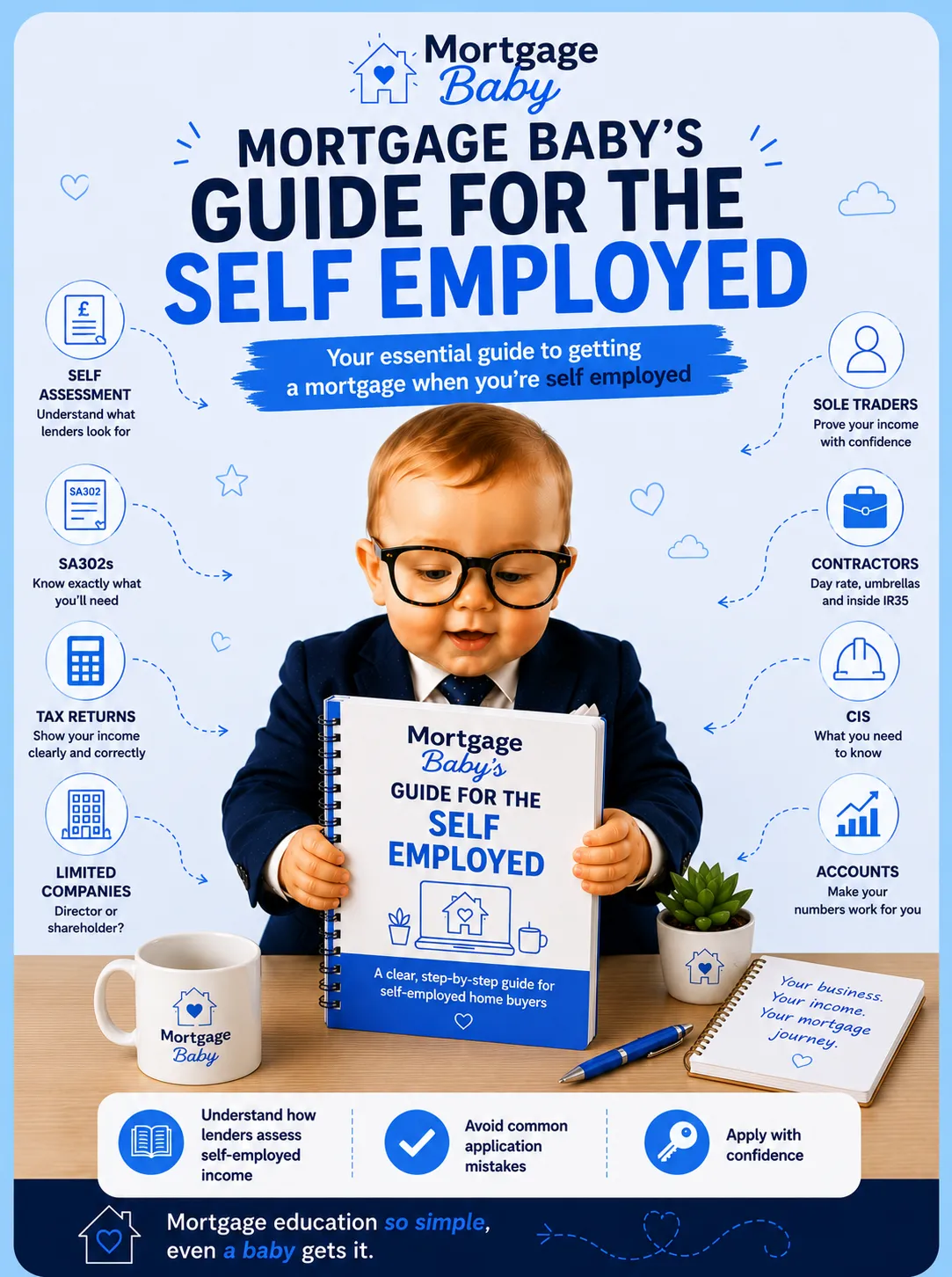
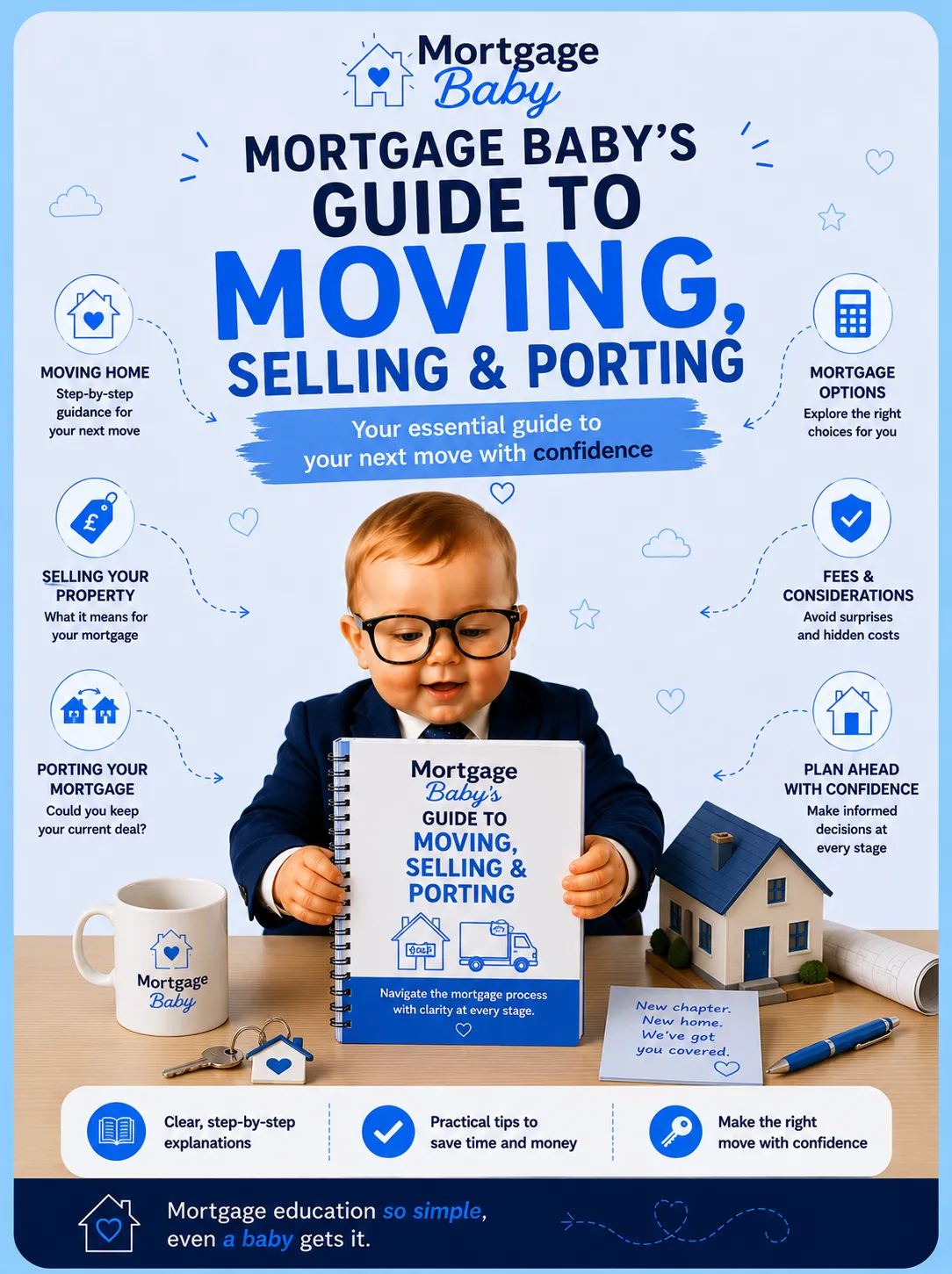
Mortgage Baby's Guide Library

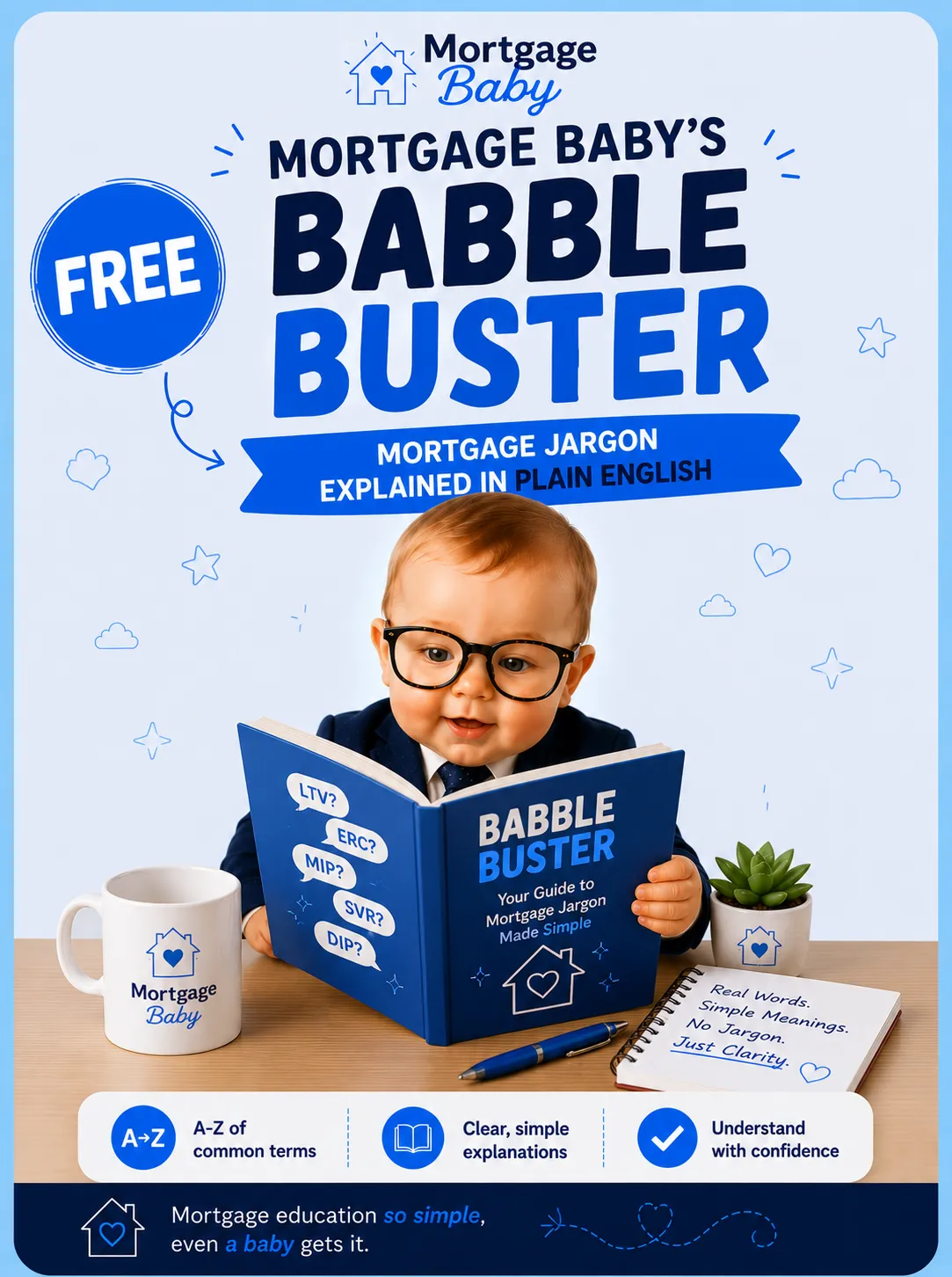
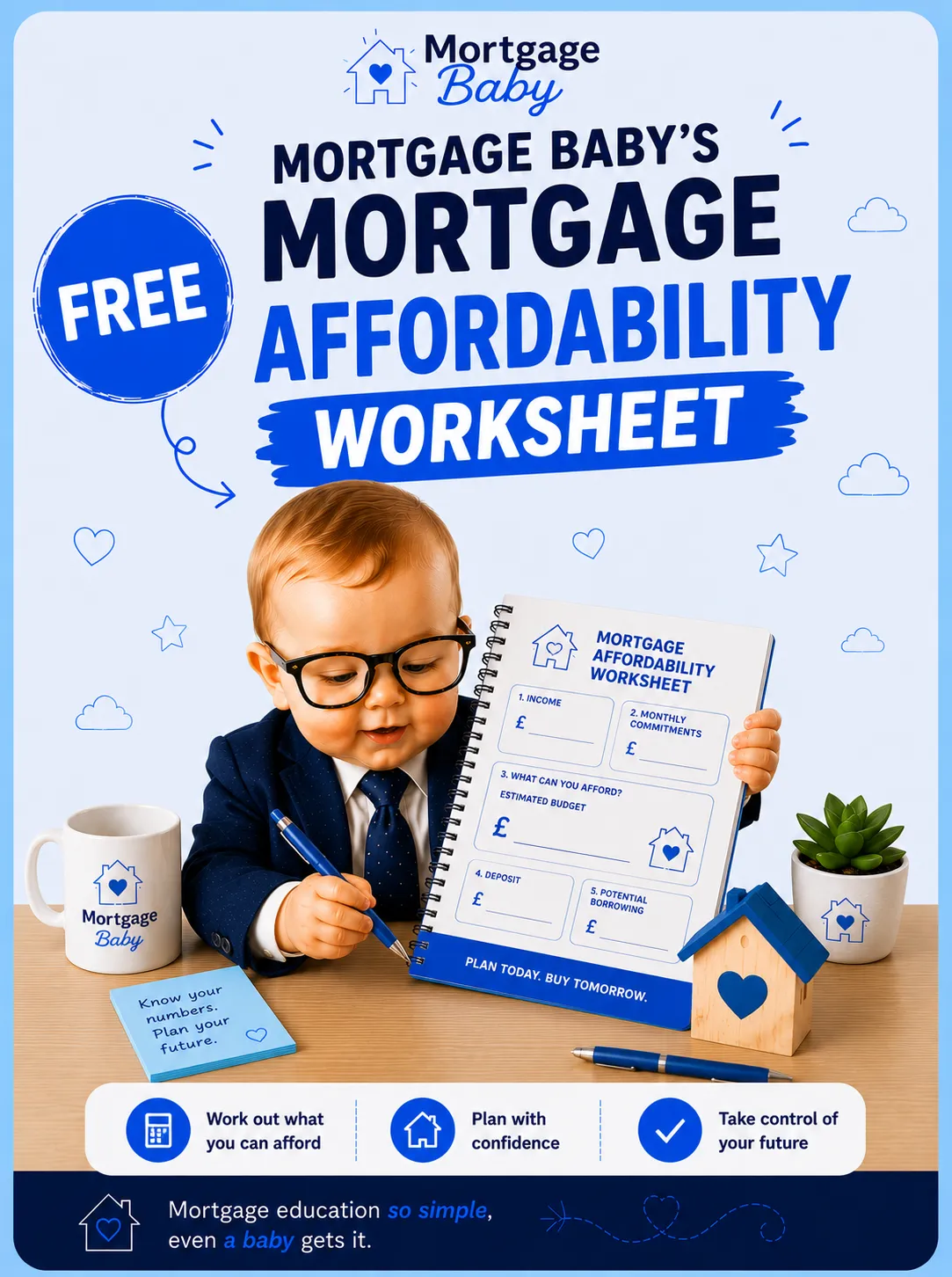
Mortgage Baby's FREE Tool Library



Why The Guide Could Change The Way You Approach Buying Your First Home

Know What Happens Before It Happens
Buying your first home can feel overwhelming when every stage introduces unfamiliar terminology, new people and unexpected requests. The guide gives you the complete picture before you are in the middle of it — helping you understand what happens next and why.

Prepare Before Timing Becomes Critical
Many mortgage and property problems are manageable when identified early. They become much harder once you have found a property, made an offer and become emotionally invested. Understand what may need attention while you still have time to do something about it.

Make More Informed Decisions
Understand the difference between maximum borrowing and comfortable borrowing. Know why the lowest mortgage rate may not be the cheapest deal. Recognise the questions worth asking brokers, estate agents, solicitors and other professionals involved in your purchase. You will still need professional advice — but you will be better prepared to understand it.
Frequently Asked Questions
WHO IS THE GUIDE DESIGNED FOR?
Mortgage Baby's Guide has been written specifically for people buying their first home in the UK. It begins before the mortgage application stage and follows the complete journey through affordability, deposits, credit preparation, property searching, making an offer, legal work, exchange and completion.
DO I NEED TO BE READY TO APPLY FOR A MORTGAGE?
No. The guide can be particularly useful before you are ready to apply because it helps you understand what lenders may assess and what you may want to prepare in advance. Whether you are just beginning to save, hoping to buy within the next year or already viewing properties, you can use the sections relevant to your current stage.
WHAT EXACTLY WILL I RECEIVE?
You will receive Mortgage Baby's complete digital Guide to Buying Your First Home, covering the mortgage and home-buying journey across 15 detailed sections. During the launch offer, you will also receive the complete audiobook — normally £7.99 — at no additional cost.
HOW WILL I RECEIVE THE GUIDE?
You will receive access to your digital guide after completing your purchase, so you can begin reading immediately. Your access details will also be sent to the email address used during checkout.
HOW DO I RECEIVE THE FREE AUDIOBOOK?
The audiobook is included automatically with eligible guide purchases during the launch offer. You do not need to add it separately and there is no additional charge.
CAN I READ THE GUIDE ON MY PHONE OR TABLET?
Yes. The digital guide can be viewed on compatible phones, tablets and computers, allowing you to keep it available as you move through your own buying journey.
IS THE INFORMATION RELEVANT THROUGHOUT THE UK?
The guide focuses on the mortgage and home-buying process in the UK. Some legal and property processes differ between England, Wales, Scotland and Northern Ireland. Where appropriate, obtain advice specific to the location in which you are buying.
DOES THE GUIDE PROVIDE PERSONALISED MORTGAGE ADVICE?
No. Mortgage Baby provides general educational information and does not provide regulated financial advice or personalised mortgage recommendations. The guide does not take account of your individual circumstances and should not replace advice from an appropriately qualified mortgage adviser, solicitor, tax adviser or other relevant professional.
WILL THE GUIDE TELL ME WHICH MORTGAGE OR LENDER TO CHOOSE?
No. Mortgage products, interest rates and lender criteria change regularly, and the right mortgage depends on your individual circumstances. The guide explains how mortgage deals work, what lenders may consider and the questions worth asking so that you are better prepared when obtaining personalised advice.
Guide Launch Offer
Know What Happens Before It Happens
Buying your first home can feel overwhelming when every stage introduces unfamiliar terminology, new people and unexpected requests. The guide gives you the complete picture before you are in the middle of it — helping you understand what happens next and why.
Prepare Before Timing Becomes Critical
Many mortgage and property problems are manageable when identified early. They become much harder once you have found a property, made an offer and become emotionally invested. Understand what may need attention while you still have time to do something about it.
Make More Informed Decisions
Understand the difference between maximum borrowing and comfortable borrowing. Know why the lowest mortgage rate may not be the cheapest deal. Recognise the questions worth asking brokers, estate agents, solicitors and other professionals involved in your purchase. You will still need professional advice — but you will be better prepared to understand it.